štvrtok 16. apríla 2020

Energy Flow: Which strategy is better for weight loss? | Steroids4U.eu

Energy Flow: Which strategy is better for weight loss?


The first question you might have thought after reading the title is probably what is the energy flow. Unfortunately, this term is not well known in the Czech Republic, but abroad it is called energy flux. It represents a combination of energy expenditure and energy income (TEI + TEE). This is the amount of total energy turnover while maintaining energy balance over a period of weeks to months. It can therefore be expressed in absolute numbers (such as TDEE) or relative (TDEE / REE). Of course, we have different calorie values ​​for different people that they need / have to take daily. Everything depends on their physical parameters and activity. Anyone who has lost weight in the past and wanted to maintain this weight had to make one of the following two alternatives


either - maintain energy balance with reduced body weight by combining lower daily energy intake with low daily energy expenditure (low energy flux)
or - to combine higher energy intake with higher energy expenditure (high energy flux)

Basically, there are two energy balance scenarios (maintenance). Because if expenditure were higher than income, one would lose weight and vice versa, if income was higher than expenditure, it would gain. Logically, therefore, it should not matter if we maintain maintenance using a low or high energy flux / flux approach. But as usual, reality is treacherous.

The study showed an interesting trend. The higher the energy flow, the lower the percentage of body fat after 3 years. 253 young people were included in the research (17-20 years old, two groups, one for girls and one for girls, the first for healthy body fat, the second for slightly higher fat). To avoid a paradoxical situation, anyone whose calorie intake was more than 33% different from its expenditure was discarded. After three years of observation, only the high-energy group showed a loss of 2.2% of body fat. Other groups, namely low energy flux, mid energy flux and out-of-balance, increased their body fat by 2.3%, 2.7% and 3.7%, respectively. These results were also consistent with the idea that homeostatic weight control is more efficient if energy balance is maintained at a high level of energy intake and expenditure. Obviously, moving more and eating more is better in the long run.

Although the extremely high level of physical activity may be limited by a compensatory reduction in energy expenditure (the constrain energy model discussed in another article), its slight increase in weight loss increases energy flow and promotes favorable physiological adaptation to maintain new weight, including better regulation of appetite. Similarly, observational or other studies have shown a significantly higher level of physical activity (higher energy flow) in people who retained weight compared to those who recovered it. For example, even in a recent experimental study, they found that high energy flow (using a treadmill for 3 days) leads to an acutely greater appetite control, while low energy flow resulted in the exact opposite, an energy surplus of 17.5% during eating and libitum, whatever your throat likes. Conversely, a reduction in physical activity did not result in a natural decrease in energy intake.

Thirdly, Rebecca Foright has elaborated an interesting research in her thesis where the (obese) participants in the low-energy group (2450 Kcal,> 3000 steps) were significantly more hungry and felt less satiated at the end of the day compared to high energy flow (3200 Kcal, 7500 steps + 500 actively burned Kcal). The average weight loss was almost identical with a target of 7%. This means that both approaches were equally effective, but one "hurt" more.

From the above we can conclude the following sentence:

Low-energy intake associated with low energy expenditure, ie low energy flux, predetermines fat gain and vice versa (1,2,3)

People who lose weight must restore their energy balance with their reduced body weight (set up new maintenance). Of course, this can be achieved with low but also high energy flows. However, a higher energy flow requires that we move more, do more sports, eventually gain some muscles, and thus improve our quality of life overall. Achieving high energy flux through physical activity is also associated with improved metabolic flexibility. It will also enable us to better manage the pitfalls of the modern world. Simply the more we eat and the energy we spend (movement, sport), the more likely we are to maintain a new weight. We have more calories available to better manage not only our hunger, but also social, emotional and casual eating. Our caloric flexibility increases, and overall adherence goes hand in hand. Anyone have a pizza? And as a bonus, appetite can be better regulated at higher calories and higher physical activity, which in turn favors high energy flow.

Steroids4U.eu | Online Steroid Shop - Buy Steroids - Cheap Steroids for sale

utorok 14. apríla 2020

Proteins face many false claims. We discussed 7 myths | Steroids4U.eu

Proteins face many false claims. We discussed 7 myths


Not only carbohydrates and fats are macronutrients that are associated with many myths. Proteins are not lagging behind, on the contrary - we encounter quite a number of untrue claims, and therefore we will tell today what the reality is.

# 1 High protein intake will damage your kidneys!

Fortunately, this is not the case and even the theory on this is based on a very fragile basis. We suppose we eat a lot of protein, we still load the kidneys, and then they cough up on us, work less, and over time their health (and hence ours) will get worse and worse. However, there is no evidence to support this in healthy people. There are even long-term studies where there was no difference in renal function in the two-year study. One of the most important researchers on the topic of high-protein diet and its impact on health, Jose Antonio, also conducted several interesting studies.

The latter dealt with a protein intake of about 3 g / kg over four months. Furthermore, we have probably the most well-known research from 2016, which examined the effect of 2.5-3.3 g / kg of proteins in one year. And before discussing the results of all the studies, I will follow up on Jose's further research, where we talk about a two-year study of people eating more than 2.2 g / kg of protein. The conclusions are the same in all cases. No negative effects on blood lipids, kidneys or liver were found. And when we look at the more extreme cases, namely 4.4 g / kg, which is not only unnecessary in practice, but we can say that a very unreasonable amount, we see the same results. High protein intake is good for kidneys. The question is whether something would change in 10, 20 or 30 years of long research, but we do not expect that, so we have to start from what we know.

# 2 And they even damage your liver

We'll blow this out quite quickly, as most studies examining the effects on the kidneys have also shone on the liver. Conclusions? No negatives, similar to kidneys. However, some people think that amino acid metabolism, which has fingers in amino acid degradation (deamination), tired of the liver, and it eventually resolves its function. However, as we already know, this is not true, so the kidneys and liver are cool and will not give you KO even at higher protein intake.

# 3 High protein intake destroys bones

That doesn't sound comfortable at all, does it? The origin of this false statement originated in the theory of acid-ash hypothesis, which causes loss of bone tissue, respectively. bone damage. Many researches have long since confirmed that this is not the case, and indeed it is very likely that proteins have a positive effect on bones. We can mention the 6-month research from 2018, because it concerned trained women, which is a great sample, as women often have a problem with bone mineral density, which is often caused by long and extreme caloric restrictions (more in our article). The conclusions suggest that the high protein content did not have a negative effect on mineral density, either the lumbar bone or the whole body. Women consumed at least 2.2 g / kg of protein per body weight.

We can conclude by systematically analyzing sixteen RCT researches, respectively. Twenty cohorts, which suggests that a high-protein diet not only does not damage bone health, but can have protective effects on bone density of the lumbar spine.

# 4 Proteins other than animal products do not count

Unfortunately, for some, protein is synonymous with meat. However, meat is certainly not the only source of protein, and from a health perspective, it would probably be better for us to combine proteins from different sources and moreover, not just animal ones. We have written a separate article about this, so be sure to study it for more details, but here we would just like to briefly point out that animal-derived proteins are better in terms of influencing muscle protein synthesis, but plant proteins should also have room in the menu. If you are one of the people who cannot take enough protein, if they do not have at least 200-300 g of meat every day, perhaps it is high time to think about the variability of your diet, respectively. your protein intake and include more other sources in your diet.

# 5 Proteins are just for men to have big muscles

At this point, I would like to recall what I wrote in Article 5 of the stereotypes and prejudices that women experience in exercise and healthy lifestyles. Proteins are not just for men, they are not just for muscles and are not overrated. Eating protein is not just about the fact that every gram of extra helps you build larger biceps. Not even close. They have a positive effect on bones, tissues, cartilage, skin, blood, saturation and appetite reduction, tissue repair, enzyme production, hormones. They are very important in gaining weight and weight loss. Let's discard the outdated media view that women are "bulky" (ie bulky, muscular) because of protein. And one more important fact. Only about 10% of the protein consumed will actually use your muscles to grow! The intestines and liver consume large amounts of protein (~ 50%) and the rest is released into the plasma.

# 6 In one meal, the body receives only 20-30 g of protein

I guess you already know that we had to discuss this on Fitclane in detail and you're right. Since muscle protein synthesis is not the only part of a protein jigsaw, there is virtually no upper limit for the overall anabolic response (ie not just in the muscles) to protein or amino acid intake in a single meal. If you have 80 g of protein in your meal, the body will not only accept the legendary 20 or 30 grams and the others will evaporate, disappearing in the black hole, in the toilet or elsewhere. It will simply take a long time for your body to absorb it. It is true that the maximization of muscle protein synthesis will probably be achieved somewhere in the middle of such a meal, but that does not mean that the rest will come out, but these are the details that we are discussing in this paper.

# 7 The more protein, the more muscle

This is again a problem with some hardcore men. They think that the more protein they consume, the more muscle they will grow. Already from the fifth point, it seems a bit that this may not be true. Indeed, several studies show that this is not true, and optimal protein intake in active people is about 1.6-2.2 g / kg. In some scenarios it is worthwhile to eat more protein, although of course one has to pay attention to what this may mean in practice, because there are certain factors that we have written about here. However, research does not show a proportional trend between protein and muscle growth. If you live the idea that 4 g / kg of protein will build up more muscle mass than 2 g / kg, then this idea is wrong.


These are the most common myths about the proteins we encounter. You can see that some of them have been discussed in separate articles a long time ago, but thanks to this up-to-date and comprehensive summary, perhaps everyone will be clear on how the proteins are. Of course, we are talking about healthy people who have no kidney damage diagnosed by a doctor. In this case, protein intake and overall dietary access should be reviewed with it. As Lyle McDonald once said, many proteins without sufficient intake of vegetables, vitamin D or calcium may not be optimal in the long run. Lots of protein and all these factors under control? Super scenár!

Steroids4U.eu | Online Steroid Shop - Buy Steroids - Cheap Steroids for sale

nedeľa 12. apríla 2020

Declared vs. real calories: imperfections in the calorie system | Steroids4U.eu

Declared vs. real calories: imperfections in the calorie system

For many of us, nutrition tables on food packaging are an important source of information about the content of individual ingredients, but also about the caloric and nutritional value of a given food. But have you ever wondered how such a table is made and how accurate it is? Is it possible to rely on the above figures?


Generally, the energy content of foods (their calorific value) is calculated by multiplying each one component that corresponds to the energy coefficients. The energy contained in the food can also be measured directly by means of a bomb calorimeter. This machine is able to measure the amount of energy released by the complete combustion of a food sample that fits into the machine. For example, researchers found that as much as 94% of meals from mainstream restaurants and 72% of fast food meals contain at least 600 calories per serving.

In reality, it works a little more complicated. Since man is not a machine, we are not as effective at burning food calories as the super machine in the picture. Due to incomplete digestion and thus imperfect absorption in the gastrointestinal tract, not all of the energy contained in a given food will enter the system to be used as energy. And here the first differences arise.

Before discussing the issue, we will clarify one important term that I will continue to use (often). These are called. Atwater factor / system. What is it? It is basically a system that every fitclan fan is sure to know. It is a general caloric expression of individual nutrients (macronutrients). For repetition, the energy values ​​are 4 kcal / g for protein, 9 kcal / g for fat, 4 kcal / g for carbohydrate and 7 kcal / g for alcohol. These figures are based on the production of food heat, literally when they are burned. Wilbur Olin Atwater, according to which this factor / system is named, also took into account the energy loss in feces in the energy expression. In other words, the energy that our body can actually “metabolize” (actually receive) is already reflected in these figures, albeit in the typical mixed diet of its time (that is, in the 20th century).

Later, Atwater was added. For example, carbohydrates in the form of monosaccharides = 3.75 kcal / g (i.e., 16 kJ / g) (Note 1 at the end of the article). Furthermore, energy values ​​for fiber of 2.0 kcal / g, organic acids of 3.0 kcal / g and polyols of 2.4 kcal / g were included. Finally, Merrill and Watt attempted to improve the system by refining the energy expression of the various types of nutrients (Note 2). For example, from 2.44 kcal / g for some plant proteins, or 3.46 kcal / g for flakes, to 4.36 kcal / g for egg protein. For vegetable fats from 8.37 kcal / g (eg from cereals, legumes, fruits or nuts) to 9.02 kcal / g for fats contained in eggs, meat. Furthermore, for carbohydrates in cocoa chocolate from 1.33 kcal / g to 4.16 kcal / g in white rice. In their book, they brought many concrete figures. But in the end we ended up on average with the common values ​​of 4/4/9 - Kcal / g.

As I have already outlined, the basic Atwater system does not take into account how absorption differs depending on the type of food and its processing or the person consuming it (which may otherwise absorb some specific ingredients). It also does not take into account the effect of food thermal effects (TEF) or energy expenditure (TEA). I have picked a few concrete examples to demonstrate the differences in calories, but before we look at the system that applies in our region.

Pursuant to Regulation (EC) No. 1169/2011 of 25 October 2011 on the provision of food information to consumers, we operate on the extended Atwater system. However, it does not distinguish between monosaccharides and polysaccharides (page 45), so their energy expression is identical. Data on caloric content of foods can be obtained in triplicate. By analyzing the food, calculating from known or actual average values ​​of the ingredients used (how many fats, carbohydrates, proteins, etc.), or taking data from relevant sources (eg national food databases). As a result, the same food may have three different values.

In addition, the Directive introduced an obligation to include nutrition information on the packaging of food (with certain exceptions). In the Slovak Republic this obligation is valid from 13.12.2016. The amount of fat, saturated fatty acids, carbohydrates, sugars, proteins and salt must be labeled. At the same time, it is only up to the manufacturer of the product to indicate on the packaging, for example, fiber or alcohol sugars (polyols), etc. This can lead to inaccuracies in foods with higher fiber content (alcohol sugars). In the caloric table, the carbohydrate content (under which these ingredients are included) is misrepresented, so the real calories are lower than those declared in the table. If the manufacturer uses a conversion based on the content of individual nutrients, he may round them to whole grams (eg 1,6 g = 2 g). It should be added, however, that although these are not some relevant numbers from the perspective of a single food, a number may already deviate.

However, there are also some guidelines for tolerances for nutrition labeling purposes. This means that, for each nutrient, a certain degree of inaccuracy is permitted for each nutrient, depending on its quantity in the food. Of course, this is logical because it is impossible for food to always contain exactly the same levels of nutrients. However, the content of these nutrients in food should not deviate significantly from the declared values ​​so that we (consumers) are not misled. For example, with a carbohydrate content of up to 10 g per 100 g of food, a tolerance of ± 2 g is permitted. Fats may have a deviation of up to 1.5 g for products up to 10 g per 100 g of product, with a content of from 10 g to 40 g / 100 g of product being already permitted 20% upwards. What does this mean in practice? A food product with a declared sugar content of 8,5 g shall be within the tolerances when checked, if the controllers measure a sugar content between 6,5 g and 11 g / 100 g.

Even for these inaccuracies, the calculation of energy values ​​should rather be considered as an alternative to direct measurement, but reality will not let go. We cannot ask that each food be individually tested in a bomb calorimeter for calorie content. Similarly, we cannot idealize the values ​​on the food packaging.

https://www.popsci.com/resizer/Mte1aslL8PgMhjtAZLIv7Vt_hfI=/760x506/filters:focal(2376x1584:2377x1585)/arc-anglerfish-arc2-prod-bonnier.s3.amazonaws.com/public/JF5I3KHQMHYSBKBW4XKBLWT42M.jpg
And now back to specific food categories. First we look at the nuts. According to commonly used calorie mathematics, a 28 g portion of walnuts has 185 calories, but the actually metabolizable energy at this amount is 146 calories. This is 21% less than the Atwater factor predicts. Almonds ended similarly. Their actual metabolisable energy content is 32% lower than the table data. For pistachios, this difference is 5% and for cashews 16%. In other words, the amount of nut energy available to the body for use or storage is lower than generally indicated on packaging. The following order applies: Almonds> Walnuts> Cashews> Pistachios. However, we are talking about raw nuts. Nuts processed in the form of butter, oil or flour lead to less excretion of fat in the stool than unprocessed nuts. This suggests that the intact structure of nuts inhibits the digestion and absorption of macronutrients therefrom (Note 1).

Interestingly, even a low-fat, high-fiber diet will have up to 11% less metabolizable energy. We are talking mainly about fruits, vegetables and cereals with high fiber content. Researchers from Korea looked at the differences between selected foods, using animals to test. They found that the differences can be significant. Korean dishes, consisting mainly of rice or pasta, had lower real values ​​than typical Western dishes. Pizza, hamburger and spaghetti had 8.8%, 2.4% and 10.9% higher metabolic energy, respectively, while the Korean ones - composed mostly of different types of barley, rice and pasta - moved from 4-17 % below the table values. Food processing can significantly alter the structure and composition of food, thereby affecting the digestion of macronutrients. Also, fermented foods are more available for absorption and therefore may be more caloric than their non-fermented counterparts.

Above you can see graphics showing three kinds of diets. It is a typical western diet, predominantly composed of processed and calorically concentrated foods. Mediterranean diet (see note 4) and vegan diet. We compare the three diets according to the following criteria:

General = Atwater calculation system how it works in the Czech Republic (EU)
Specific = Atwater system supplemented by Merrilla and Watt recommendations. It is therefore based on the digestibility coefficients of category-specific macrorutrients (eg 1 g of nut fat has 8.37 Kcal, but 1 g of egg fat has 9.02 Kcal, ie it has no fixed values ​​for macronutrients)
Modified = improved system that uses food specific macronutrient digestibility coefficients published in the scientific literature
It can be seen that the smallest deviations occurred in the western style of eating and the largest in the vegan style. What does it mean? Within a varied and balanced diet, caloric differences (real vs. declared) represent only a marginal problem. Myfitnesspal can tell us the truth. However, for individuals who adhere to a specific style of diet (vegans, carnivore), we may see more relevant deviations. This is true for a diet with a very high intake of fiber, whole grains or seeds, i. for meals based primarily on plants, which retain most of their natural intact structure (they are minimally processed). In such cases, it can be estimated that the actual metabolisable energy may be from 10-30% lower than the tabular (myfitnesspal) values. And vice versa. If you eat predominantly junkfood and various high-processed versions of meals, you will probably receive a little more calories than declared on the package and in calorie tables.

https://www.menshealth.com.au/media/10902/junk-food-and-healthy-food.jpg

The final word

Today you could read that calories are not perfect. Uh, their energy expression for specific types of foods and nutrients is not perfect. But must it be? You might even have to worry about, oh, calories aren't like calories! It is, but it is not. Manufacturers make inaccuracies, we write inaccurately, there are individual differences between us. However, their relevance is on average low. The main point of getting an overview of your daily energy intake is not 100% knowledge of exact numbers. In addition, with a balanced diet, these inaccuracies are lost (averaged) in the daily total. Above all, we need to manage our calorie budget as a whole. To avoid eating much more / less than we need to achieve our goals. This is the main reason why everyone should have a more detailed overview of their calories for at least a certain period. It's like money, you have to learn their value first, then you can handle it economically.

Steroids4U.eu | Online Steroid Shop - Buy Steroids - Cheap Steroids for sale

štvrtok 9. apríla 2020

Arnold Schwarzenegger - training, diet and motivation of the bodybuilding legend | Steroids4U.eu

Arnold Schwarzenegger - training, diet and motivation of the bodybuilding legend

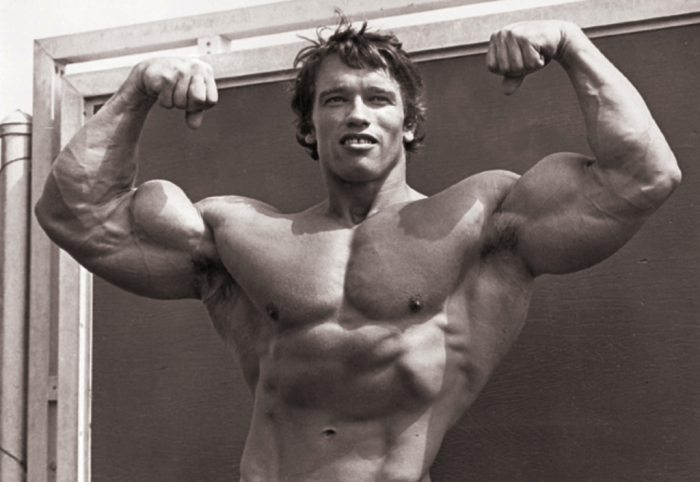
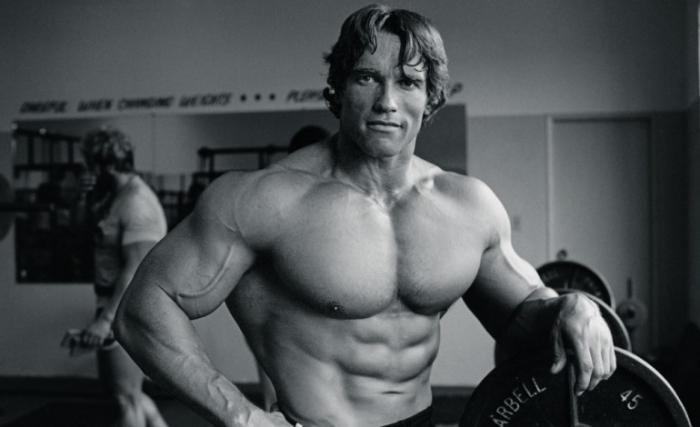
Many people cannot decide who they want to become in their future. But Arnold Schwarzenegger knew from a young age that he wanted to be a bodybuilder and not just that. He wanted to be the best. He adhered to this idea, worked on it and eventually achieved it. How did he do it all?

Arnold Schwarzenegger

The power of Arnold's vision


"I've always believed that you need a vision to be motivated or to work hard."

Arnold's vision was born in his early childhood when he first saw the world's heavyweight champions. He recalls, in particular, how Tommy Kono won the 1961 title. Universe. Watching these bodybuilders had an incredible impact on Arnold and began to develop his own vision.

At the age of 15, Arnold decided to start training as a real bodybuilder. "I started watching heroic, elaborate guys and I was reading the magazine he had in Reg Park's cover photo depicted as Hercules." Reg's life was written in the magazine and how Mr. Universe. It is this edition of the magazine that has become the path to Arnold's future success. “If at any time I felt lost in my life, that feeling was gone. Now I had the direction. I realized that I had a special ability that could not be trained. The ability to see things very clearly. ” Instead of seeing Reg Park on London, Arnold saw himself there. "I've seen hundreds of bodybuilders around me, holding a trophy and hearing everyone chant my name."

Arnold Schwarzenegger - training, diet, motivation

Arnold was motivated by a vision of victory more than anything else. “It was so strong that I didn't even need the discipline - it just dragged me to go to the gym every day. I knew that every training I had since had taken me one step closer to turning this beautiful vision into reality. My life took a single direction - Mr. Universe, training and typing. ”

In 20 years, Arnold reached his goal and became the youngest Mr. Universe in history. Instead of enjoying the glory and relaxing, Arnold decided to train even more. “I felt I was undoubtedly a new hope of bodybuilding. But I still didn't get where I wanted to go. Become Mr. The Universe is like winning the Golden Glove or the Boxing Olympics - it's great, but it's far from being the best boxer. ”

But Arnold didn't want to be just a great bodybuilder, he wanted to be the best. “I realized it would take me a while. In America, extraordinary bodybuilders like Serge Nubret and Dave Draper were more elaborate, more popular and more sophisticated to pose. ”

When Arnold was 21, he moved to America and people immediately began to notice him. “They whispered about me. They said this is the boy from Austria. He is the boy who is already making a deadlift with 317 kilograms. ” This confirmed Arnold that he had taken a challenging but correct step. “I barely understood. I couldn't watch news or read newspapers. I felt isolated from the outside world. I felt alone. Nevertheless, they greeted me with open arms. I got so much love and support from bodybuilders who didn't even know me. I will never forget it, it was something really special. ”

All bodybuilders long for perfection and Arnold was no exception. “I never felt I reached 100% of my potential. I think every bodybuilder feels that way. He wants to have bigger triceps, bigger thighs and more stomach. ” Arnold's successful bodybuilding career was built on continuous improvement and attempts to improve small physical details. Working on these details kept Arnold's hunger for victory and fueled his vision.


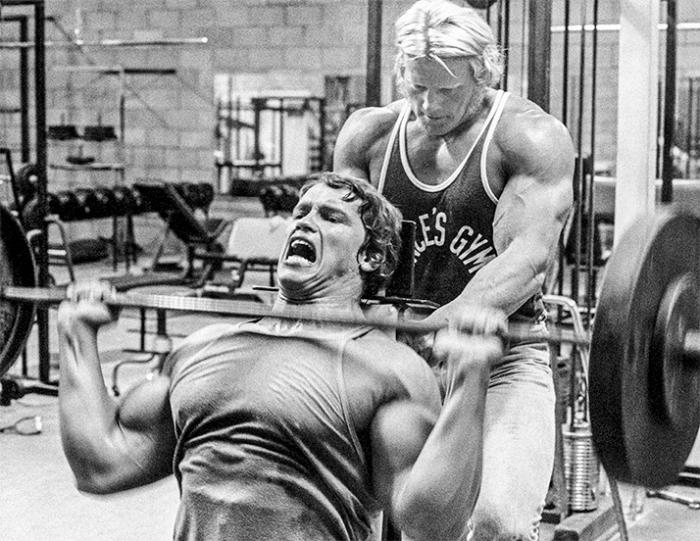
Arnold Schwarzenegger, Franco Columbu, training


“We took pictures like fanatics. Franco Columbu took pictures of me and I took pictures of him. We compared photos, observed improvements, and tried to find bottlenecks. With hard work you can achieve your goal and become successful. That's great for bodybuilding. If you are good at it and achieve your goals, you will be able to apply the same principles to anything else in your life. ”

Training according to Arnold Schwarzenegger
"The biggest mistake today in bodybuilding is that people don't include basic exercises in their workouts."

However, the basic exercises Arnold did not mean easy exercises. Many contemporary fitness centers are overcrowded with people sitting on machines, not at dumbbell stands. “When I go to the gym today, no young boy learns about moving overhead or pulling a big dumbbell to his chin straight from the floor. They all use machines. ”

Arnold Schwarzenegger, training, diet

However, Arnold does not insist on the inclusion of basic exercises because he longs to live in the past. It all comes from decades of his experience in bodybuilding and hard work, which Arnold said will not be replaced by fitness machines. “Get everything out of you, for every season. Don't spare yourself to the next. This is a mistake many people make. ” Arnold believes that every repetition and every series must be done with high intensity because it moves you closer to the goal.

 We chose a few of Arnold's favorite exercises to prepare you for Mr. Olympia. The fact that Arnold was awarded Mr. Olympia up to 7 times!

Exercises for the chest

“There are 3 chest exercises that you should always train. Bench press, incline bench press at different angles and dumbbell fly-flat presses (dumbbell flyes). ”

Arnold was known for the size and width of his chest. It is due to the possibility of extreme muscle tension when pulling with dumbbells lying on a flat bench (dumbbell flyes).

Arnold Schwarzenegger, exercises for the chests

“Exercising with a dumbbell lying on a flat bench is a workout that has worked to fully develop my pectoral muscles. Remember, it is important for your muscles to stretch and strengthen them. In this exercise, I tightened my arms as far as I could, and then returned to the original position to touch the dumbbells. You will not replace this exercise with any machine. ”

Back exercises

“I trained on my back with undershoes, big dumbbell leaning forward, one-handed dumbbell leaning forward, and specially modified two-handed dumbbell leaning forward. I relied on these exercises from the beginning to the end of my career. ”

If you already have oaths included in your workout plan, do them without supporting your chest. “There are many bodybuilders who have trouble working out the lower back. You need to relax your body and allow the lower back to keep the load straining. This will give you the right strength and develop a wide back. ”

Biceps and triceps exercises


Arnold trained all kinds of biceps strokes. One technique he used to shock biceps was that the first repetition began with 124 kilograms. On the second he lost weight and on the third repeat he lowered his weight even more. “That was the way I grew without ever putting the dumbbell down. I wanted to let my biceps know they had no idea what to expect. They will never get used to the method of my workouts because I always have a trick up my sleeve. ”

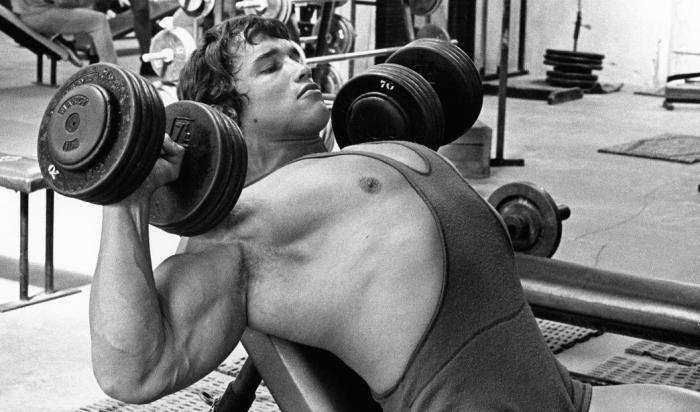
Arnold used a large barbell stroke to build a wide biceps. To isolate the biceps, he trained dumbbell strokes on an inclined bench and isolated biceps strokes. “Heavy-weight isolated biceps strokes were able to isolate the biceps, creating a“ spitz ”on the biceps. We used a lot of tight-grip pressure for the triceps. Later there were also different variants of triceps extensions. ”

Shoulder exercises

Arnold worked on his shoulders with the following exercises:

pressure with barbell press
behind-the-neck barbell press
lateral raises
presses with a big dumbbell in front of the head (military press)
dumbbell presses

“We've always been doing pressures with a two-handed dumbbell from behind the head and special presses with dumbbells that stretched the front deltoid from below and fully outlined it from above. Now this technique is called Arnold's pressures. ”

Thigh and leg exercises

“Drep is the most important exercise for creating large thighs. I did a squat with a dumbbell behind my head, a squat, a kick, a lunge, a one-leg deadlift, “good morning” exercises and a lot of tripping. ”

Exercises for belly

“The classic training we did to develop the abdomen was made up of lifting the legs in the lying position, lifting the legs in the trapeze vision, and sitting down. We believed that the 500 repetitions of the Romanian Sed-Leh really did work. ”

Arnold's variation of training before Mr. Olympia
In this variation of training, you exercise each muscle group twice a week. This training plan comes from the book The New Encyclopedia of Modern Bodybuilding, written by Arnold Schwarzenegger himself and Bill Dobbins.


Training split


Day 1: Chest and back


Day 2: Shoulders and hands


Day 3: Legs and lower back


Day 4: Chest and back


Day 5: Shoulders and hands


Day 6: Legs and lower back


Day 7: Rest

Arnold Schwarzenegger, training split


Protein matters!

Early in his bodybuilding career, Arnold knew that protein was the most important nutrient for muscle growth. “There has always been debate about how much protein the body really needs. I consumed one gram of protein for each kilogram of my weight. ”

Arnold weighed nearly 107 kilograms, which was a challenge for him to take 250 grams of protein a day. “It worked best for me when I had 5 meals a day. There are people who can work with three meals a day. For me, 5 meals were ideal because I was never a big one. I've always been happy with a medium-sized steak. Even if you gave me only a small 200 gram steak at the top of my career, I would be happy. ”

Arnold Schwarzenegger - diet plan

For breakfast, Arnold often had noodles, bacon, tomatoes and onions. "That's enough, but two hours after breakfast I was hungry again." Arnold never went far without a protein shaker to cover his daily doses of protein he needed for constant growth. “Whether I was sitting at a school in Santa Monica City College or working on a construction site, I always pulled a small plastic container full of milk and protein powder out of my bag. That was exactly the remaining 30 grams of protein I needed at that time. ”

An hour after the protein drink, Arnold went to do what he knew best - lifting weights at the gym. After training, he had lunch, usually steak and vegetables. Two hours after lunch, Arnold indulged in another protein sheikh. “I drank protein drinks twice a day to be able to take 250 grams of protein. However, you have to realize that we do not get all the nutrients we need, such as vitamins, minerals or protein itself, from ordinary foods. That's why we have nutritional supplements. No matter how healthy you eat, you will never get enough of the essential nutrients from ordinary foods. ” For dinner, Arnold usually enjoyed grilled chicken with brown rice, vegetables or salad with avocado, macadamia nuts and olive oil.

Arnold has left a huge mark on the bodybuilding world, as evidenced by the IFBB Arnold Sports Festival, also known as the Arnold Schwarzenegger Sports Festival. This event was founded in 1989 in Arnold's honor. It consists of classic bodybuilding (Arnold Classic), strongman competition (Arnold Strongman Classic) and fitness & bikini expa.

utorok 7. apríla 2020

Exercises for hamstrings - how to strengthen the rear thigh muscles? | Steroids4U.eu

Exercises for hamstrings - how to strengthen the rear thigh muscles?


Hamstrings are a muscle part that is often forgotten. We usually emphasize quadriceps and calf training, but the back thigh muscles seem less important to us. However, it should be remembered that neglecting any muscles has aesthetic and health consequences that you can avoid by rigorous training.

What are hamstrings?
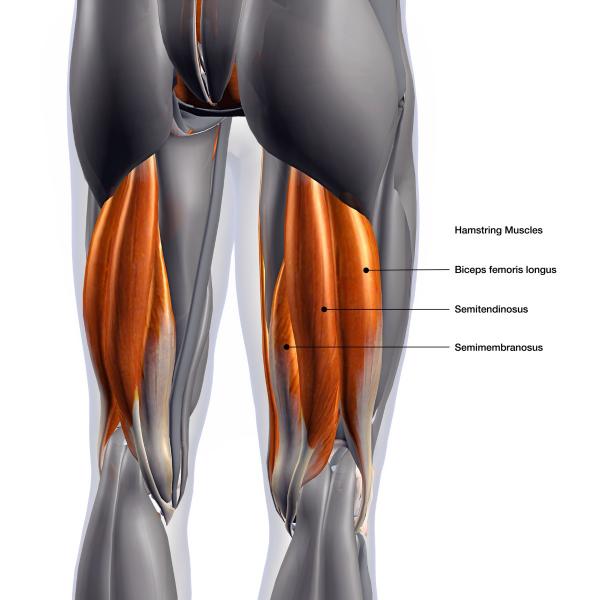
The rear thigh muscles cross the hip and knee joint, and are composed of three separate muscles - biceps femoris, semimembranosus and semitendinosus.

  1. Biceps femoris - is a muscle in the inner thigh that begins in the thigh area and ends at the knee. Allows flexion and rotation of the knee joint and extension in the hip joint.

  2. Semimembranosus - is the largest muscle between hamstrings, starting at the hip bone and ending at the back of the whistle. It allows flexing the knee, rotating the whistle and also extending the thigh muscle.

  3. Semitendinosus - is the longest hamstring muscle, located between the semimembranosus and the biceps femoris. It connects to the pelvic bone and ends at the whistle. It is responsible for whistle rotation, knee flexion and thigh extension.


https://www.steroids4u.eu

Best hamstring exercises

Hand on the heart, do you also practice hamstrings during leg training? The reason you should not forget them is not just the symmetry and appearance of your body. Weak hamstrings are one of the most common causes of injuries to athletes that occur in both men and women. In this article we will introduce you to 10 exercises that will give you strong and aesthetic hamstrings.


1. Romanian deadlift
Romanian deadlift is one of the most effective exercises for strengthening the rear thigh muscles. It is different from the classic deadlift, because the Romanian version almost does not bend at all. How to do it? Grasp the dumbbell approximately in the width of your shoulders with your hands pointing down naturally. Bend your knees slightly and bend as if to lay a dumbbell on the floor. Keep your back straight and be careful not to bend your knees too much, otherwise you are not exercising properly. As you move down, feel the pressure above your knees and thus in the hamstrings. Then return to the starting position by pulling the sitting muscles.

deadlift


2. Sumo deadlift
Sumo deadlift is another variant of deadlift that is designed to strengthen the rear thigh muscles. Approach the barbell so that it crosses the middle of the feet. Keep your legs wide, close to the wheels during this exercise. Bend your waist and grasp the dumbbell with both hands in the middle. Bend in the waist, point your gaze in front of you and hold your chest upright. Lift the barbell by attaching the hips and knees and hold with the hips facing the barbell, pushing the blades together. Then return to the starting position.

Sumo deadlift


3. Leg press
Sit in a leg press machine, place your feet on the platform, and hold your feet approximately the width of your shoulders. Release the safety lever and use the thigh muscles to push the weight until your legs are extended. However, never over knee during this exercise to avoid injury. When inhaling, slowly return to the starting position so that your knees and thighs are at a 90 degree angle.

Leg press

4. Stumbling seat
Set the desired weight and sit in the machine. Place your feet on the cylinder so that they touch it a few centimeters below the calf. For exhalation, push the cylinder down, under the thighs, and hold for 1 second in the final position. Then inhale and return to the starting position.

stumbling


5. Stumbling 
Choose a suitable weight, lie down on your stomach and grasp the handles with your hands. Place your feet under the cylinder so that they touch the cylinder a few centimeters below the calf. During the exhalation lift the cylinder and hold it in the final position for 1 second. Exhale and slowly return to the starting position. Make sure that you do not move your thighs when you lift the roller, and that you stay stable on the mat all the time.

https://www.steroids4u.eu


6. Good morning exercise
The main advantage of this exercise is that you do not need machines, only two-handed dumbbell. You start with a dumbbell on your shoulders, your back is reinforced all the time. Bend the knees slightly, push your butt forward and lean forward to 90 degrees. Then, inhale, return to the starting position. In addition to hamstrings in this exercise, you also strengthen the sitting muscles and weightlifters.

“Good morning”


7. Hyperextension
Hyperextension is a great exercise for hamstrings, but also the lower back and sitting muscles. Stand in the hyperextension machine with your feet firmly anchored. Cross your arms over your breasts or behind your head. Bend your waist and bend your torso downward as you exhale. Then, inhale, return to your starting position. Keep your head in line with the rest of the body throughout the movement and feel the pressure in the rear thigh muscles.

Hyperextenzie


8. Putting on the hyperextension bench (Glute-ham Raise)
This exercise will remind you remarkably of hyperextension. You can do it on a special GHR bench, or your sparring partner can help. If you have a suitable bench in your gym, place your feet firmly between the rollers, put your thighs on the mat and get started. During the entire exercise, keep your lower back tight and exhale with a breath. Then lift to an upright position so that your knee is at a 90-degree angle.

Zanožovanie na hyperextenznej lavici (Glute-ham Raise)
If you do not have the option to use the machine for this exercise, knock on your knees and ask a friend to hold you behind your ankles. Like the machine, make an exhalation move down and then inhale up with hamstrings and sitting muscles.

9. Hip Thrust
This exercise is easy to equip, you just need a two-handed dumbbell. Lie on the ground and bend your legs in your knees. Place the dumbbell on the hips and lift the buttocks using the sitting muscles. Hold on for a while and go back to the mat. With hip thrust, you will probably feel more pressure on the sciatic muscles than hamstrings, but both muscles will engage as well.

Hip Thrust


10. Pulley loading
Attach the adapter to the ankle and lower pulley. Stand one step away from the machine that you can hold with your hands. Stagger the leg with the weight back so that your knees are slightly bent at all times. After the series, repeat the exercise with the other leg.

https://www.steroids4u.eu

nedeľa 5. apríla 2020

Will PROTEIN HELP ME TO DIET? | Steroids4U.eu

Will PROTEIN HELP ME TO DIET?

Recently, posts like "I want to drop, should I buy protein?" Or "Is this protein suitable for diet?" I admit that initially I did not understand these questions much. Why shouldn't protein be suitable for diet? Or vice versa, how does it affect fat burning? These questions can be surprised and often smiled.


After all, so-called fat burners help to reduce fat. Synephrine, L-Carnitine, stimulants like caffeine, etc. But then I realized. After or even during the season, you will often find interviews where individual competitors praise the inclusion of high-percentage proteins in their diet. Similarly, a glimpse into the clinic is enough to confuse you that we recommend something other than the body shaping phase for so-called volume. Rendering if you want. Then it is extremely clear that a novice exerciser, a layman, or simply someone who wants to use the gym training to reduce weight is lost in this information. I get it. All knowledge has its degree, and as they say, no scholar has fallen from heaven. So let's have a nice look at what the protein is. And let's say it's pretty half-naked.

Each protein is suitable for diet. Yes, even if it may confuse you now, you won't make a mistake when you buy any protein from our range. It's about how you combine it into your diet. And that is the whole core of the problem. Protein = protein. Protein = the building component of muscle. Without protein, muscle will not grow. And I kind of assume that you would like to strengthen the diet on weight reduction, or even better to gain some extra muscle. Bad news to top. You need to adjust your diet. It won't work without it. You may want to stay in the gym, but the moment you order the fried cheese in a restaurant or a hot dog on the street, your physical effort is where the ordered food comes from.

The key to success is the reduction of carbohydrates and especially fats. Not to mention refined sugars. I know that at this moment you have no idea what carbohydrates, proteins are, what it is in, etc .. You will certainly learn that over time, do not worry. In the meantime, go with common sense. They have been instilling in our heads since childhood that sugars are bad for teeth and that we will be fat. We know that, right? So get rid of the sugar. I'm talking about that simple. Stop sweetening coffee, don't drink coca cola, don't smell candy, don't make cookies, don't eat cakes. That one cup of coffee really hurts you, not that, take the poison. But sugar is still cool. Fat is much worse. So while a gram of sugar (carbohydrate) is 4.1 Kcal, a gram of fat is already 9.3 Kcal. Ajajaj. Get rid of fat! But you can tell. Start with the visible one. Do not lubricate your bread with butter (yes, it is possible), do not pour meat in oil, do not let the kraul fries float in a fritter. Don't jump on stupid light majolica tricks. Yes, it's less fat than the Hard version. Instead of five tablespoons of oil there are only three, but you don't even need it.

If you have cut off your diet from all sorts of serepets, the next step is to shed the carbohydrates or manipulate them and calculate the nutritional values. But you don't know it anymore and you are frustrated. Or you simply "don't eat" your transformation and return to your goulash. But that would be a shame. So let's try again. Simply.

And right now, protein comes. The point is that everyone has too much carbohydrate in their food, while protein is not so much. It is also often related to finance. While carbohydrates can be found in economically accessible foods such as potatoes, pasta, rice, etc., the protein in the form of meat and eggs is worse.


But we need the proteins. Muscles, growth, firmer butt, remember? The best option is to supplement the proteins in the meal. But this is sometimes a problem. With a vision of career and fame, bodybuilders are determined to carry boxes of food with them everywhere, but you aren't such fanatics, are you? But what to eat at work? We need a little carbohydrate and you don't want to chew meat for a break. The solution offers a high percentage protein. This is the one that has the highest number of proteins and the lowest amount of carbohydrates per 100 grams. Fats will have little in any case. The Extrifit product range is Iso 90 and Peptibeef, and especially Hydro Iso 90. In all cases, the amount of protein is around 90 grams per 100 grams of powder and that's a lot. Carbohydrate is at least there. At the same time, you need at least 1.5 grams of protein for your weight. Certainly you will receive something from food, but as we have already said, it usually results in beginner or lay efforts that the protein from food is less than it should be. However, if you include the protein twice a day with two scoops, you get about 100 grams of protein without fat and carbohydrates. And that, along with your diet, must be rich enough. For women I recommend half. Ie. 2 scoops a day.

And with this giant detour we got to explain why and which protein is suitable for diet. The protein itself does not cause any fat loss. It is only a supplement to the often poor or rather incomplete diet plans. If we thought at the beginning that you wouldn't make a mistake with any protein, and at the moment it wouldn't be so confusing with the previous text, then be aware that the differences in the amount of carbohydrates in the product aren't that significant. They play their part when your diet is broken down to the last gram of protein you have received and you are sticking to it more bitterly than a Muslim Koran. But I do not think it would be the case of someone who would like to "lose something while gaining some muscles" :-) Perhaps it helped you.

štvrtok 2. apríla 2020

5 reasons why I will be after quarantine a better fitness guy | Steroids4U.eu

5 reasons why I will be after quarantine a better fitness guy


Look, I'm also annoyed that I can't go to my favorite gym, and that we now have more limited opportunities to do sports than before. I was there almost every day, I took the people at the gym as the color of my normal day, some even as friends, and I really miss the coffee at the bar. But I dislike the eternal cribs about how we can do nothing now or not have a baking tray ready for a summer holiday. Honestly, we'll be happy to get to Machacha, let alone think that we'll be rolling somewhere on the beach this year. This is more at the level of utopia than the real plan. Maybe another year, and we'll be fine.


But the point is not to bitter. We are a pessimistic nation. And so I bitterly understand the bittering around the closed fitness. It's in us. After all, something very positive can be seen in every situation, and so is it here. So in my spare time, which I have now more than I would like, and I feel a bit like Tom Hanks in the Castaway, I tried to think what it would be like when it was over. And you know what? I thought we'd be better. I'm not saying leaner, I guess not. Well, maybe muscular, but why are we going to be fitness better and tuned to new challenges and achievements? Believe me, it will end once, and the post-apocalyptic time will ask, "What have you been doing at home for days?" Here it will be shown…

We will appreciate every moment in the gym and we will not be a "fitness fool" - we took the gym for granted, with a poisoned face and an expression of an unbelievable tough guy not stumbling on the fitness center every morning and evening biblical flogging on the cross.

The gym was such a matter of course that we bothered when someone accidentally locked it up at 3 pm, or, on the contrary, that it was closed for New Year's Day for half a day and you couldn't leave your important training at 8am… ” How could anyone afford this, after all, you have to train and your ideal time is around 9am in the morning. Evening doesn't make sense anymore ... and there are too many people. I hate people… even though they actually have the same goal as me ”.


Sorry, I got a little carried away. But look at it differently. I can imagine that day (and I firmly believe that you will dream of it as well) who, as yet, tells the story of Middle-earth. The day the rainbow lights up over the gym door, the unicorn runs over, kills Chuck Norris, blows the homophilic rainbow, and opens the gym or fitness center door with the unmistakable iron smell. Your gym will be tidy, improved (or at least it will seem, after all, you got used to two dumbbells in the corner of your apartment) and it will smell somewhat familiar. You'll be home again…

Suddenly you realize that it is not so commonplace. That you could smile at the fitness center staff because you see it after a long time and she's the one who now gives you the chance to make your dreams come true. You will be pleased to be able to touch the barbell more than the dozens you have had since your childhood, load it and fold it without thinking what you could still stick to the axis in the apartment. And also that you can put it in the easel, put a towel on the bench, take a shower. All this luxury.

And even seeing people who missed so many of your dumbbell in front of the home mirror. And you are actually quite happy. Maybe it'll give you a little tear in your eyes, get ready… you've met your family. It just will be different, better and you may appreciate the iron comfort more.

We will find out that it is different - one major advantage is the iron absence. We realize that we don't have to be locked in the gym 24 hours a day, 7 days a week, and that there are actually other movements of our body, not just a single-articulated biceps stroke. That our body is actually quite functional and can cope with a much more demanding composition of movements.

All of us are going to pull out the old dumbbells, expanders, towels and old broomsticks. We went through a lot of fun and maybe a little bizarre trainings of youtuber and fitness gurus who taught us how to work with our own weight and weird tools, from the canister to the pan. And we may have found that it hurts, grows, that our muscles react to us, and surprisingly, they stick to the creeping fat layer.

I understand, not every one of us can do it, and not everyone suits and still grumbles that it's useless. But maybe we will be able to move some of the workouts to the workout pitch, out to the air or to the front yard. I know not, but maybe ...

Maybe this will make the clumsy hulks a more functional athlete who already knows he can lunge in a gym other than the hallway. Or that sometimes, when not going to the races, it can easily stretch the skeleton on the bike and it will have an interesting effect.

Simply, we become more complex and maybe even more creative athlete. And yet that is part of fitness life.

Are we going to be rested, sleepy, and busy - do you sleep every day until the time you would have thought heretical before, and actually it doesn't bother you at all? I also. Then I sit on the bed for a long time, go through social networks and mails, have a coffee and consider going back to bed. Most of the time it doesn't give me that, but those days are suddenly lazy, sometimes taking a nap at work after lunch, remodeling it again, and so on. I'm a little scared that I will be endlessly lazy after the quarantine. But I believe (and that's the main thing) that my body will relax enough. The muscles, ligaments and tendons will recover and will be able to resist strength training and new impulses to the full. After all, during the year we burden the body from all sides and constant relaxation from training we will not experience what is a year. Such a deload comes in handy and there's no need to worry about losing any muscles. The muscle protein loses without any load after about 3 weeks, and you will surely throw some weight with a dumbbell or a free axis in the garden anyway.


In addition, we can use this long sleep to set new sleep stereotypes to aid hormonal production. At night, we are significantly producing growth hormone, up to ¾ of the daily amount, as well as a significant amount of testosterone. As you know, and I referred to it in one of my articles, the recommendations say you should sleep about 7.5 hours. Now is the perfect time. It's good to try what it does to your body. So your hormones stabilize, and as soon as you let them in a little iron, it promotes a quick return back in a better rested condition.

We will have a strong motivation to turn the fat and still "humiliate" the summer - we probably will not lie. Motivation sometimes lags a little behind everyone. I have often read fitness complaints about “how they are motivated”, “how they do not know how to move” or “that they do not want to practice 5 times a week”. Sometimes I can't even believe the endless crying. However, I believe it is over now. (unless we find an excuse elsewhere)

In my opinion, motivation will now be taken care of. And not only by suddenly being able to return to an iron game that itself is liberating and motivating. (Maybe I see it in a similar streak as in January.) But suddenly it begins to approach home, when we want to look "kind of better". Maybe someone will allow us to go swimming in the summer, to the pond, or maybe in the autumn to the races. And we certainly do not want to stand there and bitterly blame the fact that we did not manage to “pull it back” after the Koron crisis and start to cluster. We will now have two or three months to kick in and throw in the unsightly Netflix specialists with some extra pounds, in the fitness of our healthy fitness version, and to represent the physically healthiest community of the company again. And that's a nice motivation.

We will be more educated (at least I hope) - surely you are spending a lot of your time now in education and in shifting your knowledge. We now have a unique opportunity to advance our theoretical skills in nutrition, training and supplementation, which we then use in practice to hunt for a new better 'I'. Let's take this opportunity to leave Netflix as a fun evening. Because education really makes us a better fit. The proportion of how much we know theoretically is always transferable to practice. This applies not only to nutrition but also to training, regeneration and other aspects related to fitness lifestyle. Turn your free time into an opportunity to educate, all parents would surely tell you that after they now represent teachers in the home, they have taken their knowledge to the next level. Mainly in chemistry and biology. And even that will come in handy.

So, as I mentioned at the beginning. Let's not fuck, don't burn, don't want to "piss," just wait and get better. One guarantee is true. Once it is over and we get out of the house with new enthusiasm, the streets will be full of people and suddenly it will be so cheerful even in the fitness center. I believe that fitness people can always manage and make the most of every life experience.

Steroids4U.eu | Online Steroid Shop - Buy Steroids - Cheap Steroids for sale