Zobrazujú sa príspevky s označením flexing. Zobraziť všetky príspevky

nedeľa 5. júla 2020

How to gain 10kg of muscle mass? Basic requirements and the most common mistakes in building muscle mass | Steroids4U.eu

How to gain 10kg of muscle mass? Basic requirements and the most common mistakes in building muscle mass


How to build muscle mass and avoid the mistakes that are most common in the process of building it?
Muscle growth is a topic especially for men. However, this is not an exclusively male issue. Even women should not be skeptical about building muscle. Muscles are the active mass of every body. They allow us not only to look better but especially easier to live.

Article content:

* What are the benefits of muscle?

* How to exercise for muscle growth? Increase muscle mass and what affects it?

* Muscle mass - Price, options, real use, real goal?

* Basic training rules and the most common mistakes in building muscle mass.

What are the benefits of muscle?

Muscle mass is not just about bodybuilding muscles. Muscle mass is mainly a functional (active) "part" of the body, which is responsible for a number of bodily processes. Above all, however, it is a strong indicator of your health.

I will not name the ones you are guaranteed to know. Lesser known benefits include:

Thermogenesis - Sufficient muscle mass has a beneficial effect on thermogenesis. Respectively. heat regulation in the body. Due to the larger number (muscles) of capillaries and better blood circulation, it is much easier to heat and cool the body.

Posture - muscle mass is the "system" that holds your body. Enough muscle mass allows you to hold your body properly and makes it easier. Proper posture is closely related to the implementation of movements. If you hold your body correctly, it is assumed that your movements will be correct.

Self-confidence - improving physical proportions with enough muscle mass makes your body and your person more attractive. This significantly strengthens your self-esteem and your self-confidence. And as you know, confident people are usually more successful in life.

Functionality - muscles perform not only the function of moving (flexion, extension, adduction, ..). They are also largely responsible for the range of motion. With the right training, you will achieve not only greater strength but also greater ranges of movement. In terms of muscle function, your daily activities will be easier and simpler.


Strength - the priority indicator of strength is the muscles. The bigger your muscles, the more power you have. Several studies have shown that the stronger you are (the strength of your handshake), the better your health.

Power - as well as strength. Is performance directly proportional to sufficient muscle mass resp. condition that allows you to give strength.

Fat Burning and Weight Loss - With enough muscle mass, it's easier to lose weight and burn fat. The reason is that muscle mass is active mass. Active means it consumes energy. That energy also comes a lot from your fat stores.

How to exercise for muscle growth? Increase muscle mass and what affects it?

There are many exercises and workouts for muscle growth, they are affected by many variables. You have to try, evaluate and adjust the specific load parameters yourself. Your indicators should be muscle work, muscle load volume, number of repetitions and regularity of load. At the beginning of your training effort, my book Start Practicing with MOTION for Men and Start Practicing with MOVEMENT for Women can be a good guide. If you have already developed suitable training plans for building muscle mass in your training, you will find my Membership in MOTION program.

It can be argued that every movement stimulates muscle growth. The question remains to what extent this stimulation occurs, resp. what is the consequence (size) of the increase.

Studies and practice show that muscle growth is most significantly affected by muscle load (strength training) - muscle fatigue. Specifically, it means muscle load (exhaustion), which is under certain conditions (rest, nutrition) a stimulation for their subsequent growth. The whole process of muscle growth, including individual processes, can be found in the article: The principle of muscle growth as old as (Matuzalem) strength training itself. Old but functional, guaranteed and in fact the only one.

How to recognize these muscle growth variables, and which ones to use to your advantage?


You should use all the variables that are offered to you.

muscle work,
muscle load volume (number of series),
number of repetitions and
regularity of load.
Muscle work is basically a mix of load volume, number of exercises, series, repetitions and regularity of load. It is not the most important thing to devote only one "part" of the effort. On the contrary, make the most of it. If your training will be perfect in terms of all parameters, but the regularity of the load of training the growth of muscles will be absent, you will not see.

It is also possible that you will perform your trainings often enough with "tuned" other parameters, but there will be no muscle fatigue. You will not see a significant increase in muscle.

Work with all parameters. Muscles get tired enough, load them with a sufficient amount of training in the appropriate range of repetitions and perform the whole process often enough. You won't have to wait long for muscle gains.

Muscle mass - Price, possibilities, real use, real goal?

Building muscle is a demanding and long-term process. There is a price associated with this process on your part. The price in the sense of your effort (we can also call it a sacrifice) that you are willing to spend on muscle mass. This price may not be too high, but it depends on your approach, zeal and discipline.

The price of muscle mass is associated with your options. You must set aside enough time and energy for training and (non) activities outside of it. In addition to responsibilities and joys such as work, family, household, hobbies and others, it is seldom possible to waste time and energy. With a well-designed training plan, you can save a lot of this limited potential to your advantage.

The actual use of muscle mass is different from person to person. For some, enough muscle mass is the appearance of a 130kg bodybuilder, for others it is an 80kg athlete. How you know (want) to use the acquired muscle mass is again your choice. When choosing your optimum, take your real goals into account.


I meet the real goal in practice as very complicated. Specifically, I repeatedly met runners (men only) who wanted to gain X kg of muscle mass in order to look better. Their running performance (due to weight gain) decreased.

Even in endurance sports, it is necessary to have enough muscle mass. However, excessive muscle development is undesirable in these cases. These runners, therefore, immediately decided to lose weight. Endurance sports also require some muscle development, but in this case it is completely different from what was required.

Muscle mass and its development affect many other things (including changing the wardrobe). Therefore, consider the real goal of why you want more muscle and how you want to use that muscle. If you have doubts about the correctness, consult your goal and settings with an expert.

Basic training rules and the most common mistakes in building muscle mass.

Muscle overload - in training you train mainly muscles. Muscle failure is an indicator of sufficient training (training work). The literature lists several names. This is usually a muscle failure. This means that further movement of the load is no longer possible by engaging the muscles.

This is not a power failure when further load manipulation is not possible due to a lack of strength. It is also not a condition (breathing) failure when further manipulation of the load is not possible, because you lack fitness. Simply written, you can't breathe another repetition.

The biggest mistake in building muscle mass - Muscle overload.
I encounter these mistakes when developing training plans as well as in coaching practice. Preference for dynamic, functional or conditioning exercises over strength (muscle) load.


The development of your functionality, flexibility, speed,… is extremely important from the point of view of the necessary degree and from the point of view of general development.

However, for building muscle, you should prefer strength (muscle) loading through basic and additionally isolated exercises.

The biggest mistake in building muscle mass - The volume (load) of training.
The volume should be at its optimal range. This is determined in the literature as about 8-10 series for smaller muscle parts and about 12-16 series for larger muscle parts.

The numbers given are very general. This range is effective for muscle growth when it concerns "acclimatized" beginners in training and advanced trainers. It is also necessary to take into account the frequency of training and its composition.

The volume of training for beginners is very small and for the more experienced it is very large. It is necessary to start from the stated (book) numbers.

Very little training means that there is no stimulus for muscle growth. On the contrary, a lot of training places high demands on nutrition and subsequent muscle regeneration after giving too strong (bulky) stimulus to growth.

The number of repetitions is again determined in the literature in the range of 10 - 15 repetitions. I think these numbers are mostly correct (more correct than the number of series in the case above). From my practice, it follows that the most effective is to perform a majority of 13 repetitions.

There are two reasons. The first is that the number 13 is located exactly in the middle of the range 10 - 15. The second reason is the length of the muscle load. The study reported (and several others confirmed) that muscle growth occurs most at a muscle load of 60 seconds. I understand that one series of exercises should last about 1 minute. This is the time when muscles respond most optimally to their growth.

In most of my (measured) exercises resp. series, the length of time under voltage was closest to 60 seconds if the number of repetitions was 13.

The biggest mistake in building muscle mass - Number of repetitions.

The most common mistake in the process of building muscle mass is the low number of repetitions. A lower number may be suitable for primary strengthening, but it mainly develops strength and muscles at the level of myofibrillar mass.

To achieve muscle growth, it is also necessary to stimulate sarcoplasmic muscle mass.


Regularity of load means frequency of training. That's how often you train. This frequency depends on the volume of training. The largest muscle gains were recorded in the study (as further research confirmed) when the muscles were loaded twice a week. One training session for the muscular part was in full volume and the second training session for the same muscular part in the week was about 20% lower in volume. In this way, the largest muscle gains were achieved compared to several other variants.

The biggest mistake in building muscle mass - Regularity of exercise.
The most common error in the regularity of the load is similar to the number of repetitions. Beginners train little and advanced very much. In advanced training, I also perceive a significant mistake in the fact that they repeatedly load the same and also repeatedly omit the same muscle parts.

Training results in the form of an increase are also significantly influenced by factors outside of training.

Relax - in the sense of sufficient regeneration (sleep). The need for sleep increases the more and the more demanding the training.

Nutrition - enough calories and then a suitable macro formula. Increase caloric intake by 100-400 kcal per day with priority protein. Really (medically appropriate) the reported increase in muscle mass by 0.5 - 2 kg of muscle mass per month. According to the above and your settings, it is possible to gain the stated (in the title) 10 kg of muscle mass within 5 - 20 months. However, this development may not be (or will not be) linear, taking into account your level of training, as beginners gain muscle mass faster in training.

Mode - minimize stress (rush) during most of the day. Constant pressure and stress during the day, which is associated primarily with work, stimulates the release of the hormone, which is the biggest enemy of muscle. Cortisol. By minimizing your stress, you are minimizing cortisol levels and giving your muscle growth "green."

utorok 7. apríla 2020

Exercises for hamstrings - how to strengthen the rear thigh muscles? | Steroids4U.eu

Exercises for hamstrings - how to strengthen the rear thigh muscles?


Hamstrings are a muscle part that is often forgotten. We usually emphasize quadriceps and calf training, but the back thigh muscles seem less important to us. However, it should be remembered that neglecting any muscles has aesthetic and health consequences that you can avoid by rigorous training.

What are hamstrings?
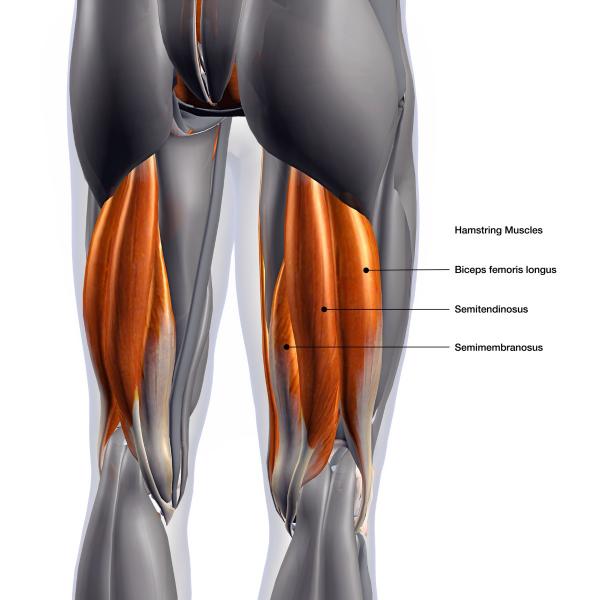
The rear thigh muscles cross the hip and knee joint, and are composed of three separate muscles - biceps femoris, semimembranosus and semitendinosus.

  1. Biceps femoris - is a muscle in the inner thigh that begins in the thigh area and ends at the knee. Allows flexion and rotation of the knee joint and extension in the hip joint.

  2. Semimembranosus - is the largest muscle between hamstrings, starting at the hip bone and ending at the back of the whistle. It allows flexing the knee, rotating the whistle and also extending the thigh muscle.

  3. Semitendinosus - is the longest hamstring muscle, located between the semimembranosus and the biceps femoris. It connects to the pelvic bone and ends at the whistle. It is responsible for whistle rotation, knee flexion and thigh extension.


https://www.steroids4u.eu

Best hamstring exercises

Hand on the heart, do you also practice hamstrings during leg training? The reason you should not forget them is not just the symmetry and appearance of your body. Weak hamstrings are one of the most common causes of injuries to athletes that occur in both men and women. In this article we will introduce you to 10 exercises that will give you strong and aesthetic hamstrings.


1. Romanian deadlift
Romanian deadlift is one of the most effective exercises for strengthening the rear thigh muscles. It is different from the classic deadlift, because the Romanian version almost does not bend at all. How to do it? Grasp the dumbbell approximately in the width of your shoulders with your hands pointing down naturally. Bend your knees slightly and bend as if to lay a dumbbell on the floor. Keep your back straight and be careful not to bend your knees too much, otherwise you are not exercising properly. As you move down, feel the pressure above your knees and thus in the hamstrings. Then return to the starting position by pulling the sitting muscles.

deadlift


2. Sumo deadlift
Sumo deadlift is another variant of deadlift that is designed to strengthen the rear thigh muscles. Approach the barbell so that it crosses the middle of the feet. Keep your legs wide, close to the wheels during this exercise. Bend your waist and grasp the dumbbell with both hands in the middle. Bend in the waist, point your gaze in front of you and hold your chest upright. Lift the barbell by attaching the hips and knees and hold with the hips facing the barbell, pushing the blades together. Then return to the starting position.

Sumo deadlift


3. Leg press
Sit in a leg press machine, place your feet on the platform, and hold your feet approximately the width of your shoulders. Release the safety lever and use the thigh muscles to push the weight until your legs are extended. However, never over knee during this exercise to avoid injury. When inhaling, slowly return to the starting position so that your knees and thighs are at a 90 degree angle.

Leg press

4. Stumbling seat
Set the desired weight and sit in the machine. Place your feet on the cylinder so that they touch it a few centimeters below the calf. For exhalation, push the cylinder down, under the thighs, and hold for 1 second in the final position. Then inhale and return to the starting position.

stumbling


5. Stumbling 
Choose a suitable weight, lie down on your stomach and grasp the handles with your hands. Place your feet under the cylinder so that they touch the cylinder a few centimeters below the calf. During the exhalation lift the cylinder and hold it in the final position for 1 second. Exhale and slowly return to the starting position. Make sure that you do not move your thighs when you lift the roller, and that you stay stable on the mat all the time.

https://www.steroids4u.eu


6. Good morning exercise
The main advantage of this exercise is that you do not need machines, only two-handed dumbbell. You start with a dumbbell on your shoulders, your back is reinforced all the time. Bend the knees slightly, push your butt forward and lean forward to 90 degrees. Then, inhale, return to the starting position. In addition to hamstrings in this exercise, you also strengthen the sitting muscles and weightlifters.

“Good morning”


7. Hyperextension
Hyperextension is a great exercise for hamstrings, but also the lower back and sitting muscles. Stand in the hyperextension machine with your feet firmly anchored. Cross your arms over your breasts or behind your head. Bend your waist and bend your torso downward as you exhale. Then, inhale, return to your starting position. Keep your head in line with the rest of the body throughout the movement and feel the pressure in the rear thigh muscles.

Hyperextenzie


8. Putting on the hyperextension bench (Glute-ham Raise)
This exercise will remind you remarkably of hyperextension. You can do it on a special GHR bench, or your sparring partner can help. If you have a suitable bench in your gym, place your feet firmly between the rollers, put your thighs on the mat and get started. During the entire exercise, keep your lower back tight and exhale with a breath. Then lift to an upright position so that your knee is at a 90-degree angle.

Zanožovanie na hyperextenznej lavici (Glute-ham Raise)
If you do not have the option to use the machine for this exercise, knock on your knees and ask a friend to hold you behind your ankles. Like the machine, make an exhalation move down and then inhale up with hamstrings and sitting muscles.

9. Hip Thrust
This exercise is easy to equip, you just need a two-handed dumbbell. Lie on the ground and bend your legs in your knees. Place the dumbbell on the hips and lift the buttocks using the sitting muscles. Hold on for a while and go back to the mat. With hip thrust, you will probably feel more pressure on the sciatic muscles than hamstrings, but both muscles will engage as well.

Hip Thrust


10. Pulley loading
Attach the adapter to the ankle and lower pulley. Stand one step away from the machine that you can hold with your hands. Stagger the leg with the weight back so that your knees are slightly bent at all times. After the series, repeat the exercise with the other leg.

https://www.steroids4u.eu

utorok 31. marca 2020

SUPER-SLOW REPEAT | Steroids4U.eu

SUPER-SLOW REPEAT

Now that we've closed ourselves in our home gym, basements and attics, where we practice all sorts of junk things that come to our hand, it is clear that we will soon hit the load limits. We must then proceed to techniques that, even with minimal or at least significantly less weight than we usually use, can still stimulate muscle fibers to grow. There are many of these techniques and I will focus on them in the coming days. At random, for example, a high number of reps, super-series, but also a completely different kind of exercise than you are used to. How about a workout full of super slow reps? Try training, which has successfully been practiced by our currently best Czech bodybuilder Lukáš Osladil.


Muscle and its fibers respond to four factors: task, time, distance and resistance. If the nerve command determines that the muscle will lift the weight along the appropriate mechanical path and at a given speed, certain combinations of motor units will perform this task. If you consciously slow down the speed of movement, another type of motor unit and fiber will enter work. In general, a slow pace stimulates more fibers, but at the expense of weight. With a fast and explosive movement, you lift a tremendous weight, slow down the movement to summarize more fibers and get better pumping. Try it yourself. Perform 10 reps at rocket pace and 10 reps in slow, controlled motion. You'll see your muscle burn as fast as Jan Hus in Constance.
First Mr. Olympia Larry Scott reported his experience of slow repetitions: “Although I reduced weight to one third of what I usually used, intensity increased eightfold because I slowed the pace… and intensity is one of the elements that increases growth hormone secretion. "
I don't know how he came to number eight, but the fact is that muscle tension gains a completely different, previously unsuspected dimension.

The theory says that the normal rate of repetition is considered to be a contraction ratio of 1: 2. If you lift the dumbbell in the positive (concentric) phase for 2 seconds, then the negative (eccentric) phase should last 4 seconds. If we add the time between the two phases, we can describe the rate of repetition with a numerical code, for example 2-1-4 seconds. In order to stimulate the hypertrophic response, it is necessary for the muscle to work for 25-60 seconds in tension (TT or duration of tension). A quick series of six reps does not meet this condition, a slow series of five reps in rhythm 5-1-4 yes. In slow movements you have to train with less weight and do less reps. Rhythm 4-1-4 corresponds to 6–7 repetitions, rhythm 6-1-4 falls within the range of 5–6 repetitions.


What happens if you consciously slow down the recurrence rate to 4 seconds up and 4 seconds down? First of all, your dazzling power will be over. To your great disappointment, you will be forced to reduce the burden to 70-80% of the previous value. Secondly, real advances in repetition or weight gains will become a thing of the past, and you will fight for each repetition for a week or two. Importantly, in training time terms, an improvement of 1 repetition is the same as an improvement of 2-3 reps at a faster pace. Specifically, 1 repetition will increase the duration of the tension by a full 9 seconds, which in 6–8 repetitions with the same weight means an increase of 12–16%. On the contrary, a huge advantage is the fact that with lower weights you will not need less warm-up series. Experienced bodybuilders who train with very high weights - say 200 kg in Benchpress and 300 kg in squat - need a lot of preparation runs that last longer than the actual training. For slow training, do a few reps with 60% target weight and 2-3 reps with 80% target weight. Needless to say, with such weights, the risk of injury is much lower than when using some huge loads.

I guarantee that during your first workouts you will feel that your muscles want to explode with a mixture of blood and lactic acid. In the exuberant imagination of some of you, certainly a disgusting idea, which for a bodybuilder is a feeling of paradise on earth. In addition to more pumping, you will also see how 70-80% of the usual repetition maximum eliminates any movement moment or cheating, and you will feel the trained muscle much better. Stressing the next day after training will be the same (if not greater) as you have been practicing before, faster and casually. What is absolutely unsurpassed is the fact that slow training will relieve the joints and tendons, overloaded with super-heavy weights and speed of movement. Even if you approach the values ​​of weights that previously caused musculoskeletal pain after months, you will not have trouble as your tendons will have much more room for weight adaptation, a training system and an increasing number of repetitions.

In rapid, often jerky movements, other muscle parts enter the action and the target muscle works against tension only a fraction of the duration of the series, while slow repetitions create a more thorough stimulus for muscle growth and strength. Maintaining a normal, natural range of motion and slow cadence will guarantee years of productive training and improvement without unnecessary, several-week pauses caused by injuries. Your flexibility will also improve. Fast and uncontrolled movements allow the use of excessive weights that cause the aforementioned pain and stiffness. Believe me, I know mine. Scratching in just a little more distant places on my body is usually quite a major problem. It cannot be said that prolonged joint pain and stiffness are the price of training, but it shows rather the wrong range of movement and insufficient stretching after and during training.

In the actual workout 2-3 sets of exercises and 1-3 exercises per muscle part. Decide for yourself whether you will exercise with dumbbells, on machines and pulleys, or combine both. Test rhythm 4-1-4 first and let your partner count the seconds out loud. You will be shocked at how long 4 seconds can last and how difficult it is to maintain tension two to four times longer than before. Squats with a barbell or Smith's machine with a weight for twelve normal reps will seem like an ancient torture torture. Go down for 4 seconds and get up for 4 seconds. Don't be afraid to lose weight, as the primary pace is 4 seconds. Fight for 6 indescribably painful reps. If you only do squats, hold on 4-5 sets. Then you can extend the time to 6-1-4 seconds and finally increase the weight of the dumbbell. And then do not be surprised that you may also throw a saber before you start applying for a wheelchair.

One super-slow repetition can also take a minute. Yes, you read correctly: 30 seconds down and 30 seconds up. But this is for the really tough masochists. This self-destructive nail of slow workout will exhaust your muscles like nothing else before or after. For example, you exercise with foot presses. After warming up you will push the weight up 30 seconds up and down for another 30 seconds ... Then lactic acid will burst out of your ears, the cleaning woman wipes it off and you run off the house.


We have celebrated bodybuilding leaders who owe their character to quick reps, and there are those who do their reps slowly as well. Bodybuilding is almost infinitely personified; where there are strong arguments for one method, the other breath will find evidence in favor of the apparent contradiction. You will always find someone who violates even the most respected principle and yet is successful.

Steroids4U.eu | Online Steroid Shop - Buy Steroids - Cheap Steroids for sale

nedeľa 29. marca 2020

A big dumbbell is enough. YOU DO NOT NEED MORE | Steroids4U.eu

A big dumbbell is enough. YOU DO NOT NEED MORE


Now that all of us are grounded and we have nothing but to sit dull on the couch and poke in our nose, many of us will have to dust off our old dad's equipment, get to your friends' home gym, or simply get a big loader in the garage and start exercising in makeshift conditions. But as they say, everything bad is good for something. Perhaps we will finally recall the old practices that brought results to the generations ahead. Perhaps, despite a flood of modern techniques and shiny equipment, you have forgotten the very foundation and now you will return to it. Maybe because now you have to bump up the opposite pulleys, pecks, and pumping pikes on everything, you get out of your basement gym much more massive than when the bacillus was just seeing. You will find a simple thing. In fact, you only need one big loader to become big, powerful…


True and tried-and-tested tasks, performed with basic tools, it is a recipe that has already succeeded in Arnold's idols, then he and a great devotee of simple exercises was even the greatest collector of Sandowa statues Ronnie Coleman. I just want to tell you that when it comes to muscle growth, it's never too late to get back to the basics. Consider: How much do you think you will gain by using isolated exercises? How much stress do you have on your nervous system by training on the rear deltas on Monday, on the left biceps on Tuesday, and on some pulley charts on Wednesday? How much will your weight increase when you grow your biceps by a centimeter? It won't be much. Certainly not as much as you gain at the moment you measure the same over your chest or quadriceps. The use of single joint isolated exercises for the tops of biceps and tears on quadriceps is not a construction, but a mere decoration…


“Arnold Schwarzenegger's best advice was his program called the Big Six. Three times a week you've only been doing benches, squats, bends, overhead presses, barbell pulls and biceps strokes, ”says powerlifter and weightlifter Dan John, holding an American record in the Masters category. “Arnold said,“ Until you master these exercises, you don't need anything more advanced. Guys, like the renowned training guru Paul Chek (founder of the C.H.E.K. Institute, focused on training counseling and sports performance development), simplified it like this: you have to squat, push and pull. With this you can really go ahead. ”

There is no single argument that you can use to counter this claim. Despite decades. It's just that. If you can handle these difficult exercises, run on. Meanwhile, in the gyms it seems that the exercisers are running, but it is usually away from these strenuous exercises. Bodybuilders like to describe themselves a bit euphemistically as sculptors of their own body. Okay. So let's use this primer and replace the hammer with a chisel with the following tools: a large dumbbell, a dumbbell, a ball with an ear, and your own body weight. And now, with these instruments, we're going to crash. We will now describe what techniques and exercises should be the required foundation for you. I do not even claim that they are the only exercises to do, but I say it will be good if you do them. And then you can start decorating.

TOOL: BIG Dumbbell


Tool manufacturers have shown decent work over the past few decades by replacing the traditional barbell with machine exercises providing increased safety and a fixed path of movement. Who has ever visited the giant FIBO fitness exhibition will surely tell me that with some devices you feel more like an astronaut than anything else. However, when you want to be stronger and stronger, free weights - a specifically large dumbbell - will not replace anything. Developing a basic level of strength is the key to both a good character's appearance and further enhancing strength, dynamism, or stamina for a sport. Without this basic strength, you will not be able to effectively manage any of this. And from the standpoint of the increase in strength, great barbell exercises seem best. At the same time, the increase in power on a large dumbbell is best measurable and most readable. I used myself from 400-800 kg on a leg press. The load on different pulley exercises was also varied. And what does that mean? Have I ever been a strong man and sometimes less? No. The weight used always depends on the machine design and how you can cheat the exercise. But it is not possible with a big dumbbell. The dumbbell just can't pee. The next five barbell exercises are as basic as they can be. Their effectiveness is based on their ability to build strength across all muscles, including stabilizers. This not only improves the performance of the athlete on the court, court or ring, but is also crucial for fitness enthusiasts who want to increase muscle mass. When it comes to gaining muscle mass, using combined exercises will typically increase your volume faster. The stronger you are, the greater the potential for muscle growth.

TIGHTENING A DIVING IN A FORWARD


Stand upright and hold the dumbbell to the width of your shoulders, keeping your knees slightly bent. Lean forward until your torso is almost parallel to the floor. Let the dumbbell hang freely down in outstretched arms. Shrug your elbows and shrink the latissimas to tighten the axis to the center of the body and then slowly return to fully stretching your arms.

SQUAT


Stand upright with your feet about shoulder width and hold a dumbbell across your shoulders. Your knees should be slightly bent and the tips slightly turned to the sides. With your head in a neutral position, a firm belly and an upright torso, go down as if you were sitting on a chair. When the knees form 90 ° angles, stop, push the heels and straighten the knees and hips to return to a standing position.

BENCHPRESS


Lay on a flat bench with stands. Grasp the dumbbell's axis from outside the shoulder width, lift it up and stretch your arms so that the axis is directly above the upper pectoral muscles. Lower the elbows slowly to lower the barbell to the lower chest. After lightly touching the chest, push the dumbbell back toward the head until it ends above the upper chest. Your arms are stretched but not stretched.

DEADLIFT


Stand in front of the loaded dumbbell, crouch and grasp it with the alternate touch (one palm forward, the other back) to the shoulder width. Start the elevator slowly and accelerate until you straighten your hips and knees. Pull your backs and hamstrings. Lower the dumbbell to the floor to return to the beginning.

STAND FRONT PRESSURE


Stand upright with a barbell at the top of your chest, holding the axis with a palpation just next to your shoulders. Push the dumbbell over your head, keep your arms slightly bent and return to your starting position with control.

BICEPS LIFT


Stand upright, slightly straddled to help your stability. Grasp the barbell about the width of your arms and smoothly raise it to keep your elbows moving as little as possible.

I already hear questions from our young readers about the lack of larger biceps and triceps exercises. You don't need to practice it. At least not in your early days. Ride these exercises as hard as you can. You will be gasping and it will be a drudgery that you have never known before in the exercise of 30 series of biceps. Believe me, after such training, you will be more massive after a few months than your classmates who bet on an isolated arm exercise. Also, remember that Arnold himself recommends this type of training. And the demigod of bodybuilding is not in doubt.

nedeľa 9. februára 2020

Just straining the muscles in front of the mirror may do more than you think | Steroids4U.eu

Just straining the muscles in front of the mirror may do more than you think


Feelings of joy, sadness, perhaps narcissism or satisfaction. This is also what we experience by simply straining the muscles in front of the mirror or controlling the form, respectively. Today we look at one interesting study, which is not the only one of its kind and is not even a breakthrough, just puts a log in the fire of hypertrophy, ie muscle growth.

We are talking about this, published in June 2016. We will not go into detail, but let us remember it important. Each participant had two tasks. The first was that with one hand, they were supposed to perform a biceps stroke without a load, using the full range of motion and extending the hand as much as possible (a total of 4 sets of 20 reps with 30 second breaks between sets). The second task was to perform a biceps stroke with the other hand, but with a load (total 70% 1RM - maximum per repetition, in four sets of 8-12 reps with a 90 second break between sets). Elements of progressive load increase were used. Well, but you're definitely interested in the results.

Bolo preukázané, že napnutie svalstva bez nejakého zaťaženia, napríklad jednoručkou, zvýšilo svalovú hmotu porovnateľne ako rovnaké napínanie svalstva so záťažou, teda s jednoručkou. Druhá skupina využívajúca záťaž, zaznamenala zvýšenie sily a svalovej vytrvalosti oproti prvej skupine, čo asi ale nie je prekvapením. To znamená, že nárast svalovej hmoty môže nastať aj bez nejakého zaťaženia, keď predpokladáme, že sval bude v dostatočnom napätí a využitý bude celý rozsah pohybu. Sila a svalová vytrvalosť budú však v tomto prípade mimo. Smutná správa na koniec, výskum bol praktizovaný so začiatočníkmi, takže je pravdepodobné, že pri pokročilých cvičencoch môže byť situácia odlišná, keďže tí potrebujú väčší stimul.
 Zaujímavé podnety uviedol aj Bret Contreras, ktorý nezabudol na fakt, že výskum bol riešený v rámci bicepsu, ktorý je pomerne ľahké dostať do poriadnej kontrakcie, narozdiel od iných svalov, s čím musíme jednoznačne súhlasiť. Takisto spomína, že to nie je len o základných svaloch, ale aj o ich pod-častiach, ktoré sú bez záťaže vystaviteľné kontrakcii extrémne ťažko. Je to však krok ku ďalšiemu potenciálnemu skúmaniu, no rozhodne môžeme povedať, že “flexovanie” nie je na škodu a zdá sa, že naozaj môže nejaký ten centimetrík navýšiť.